

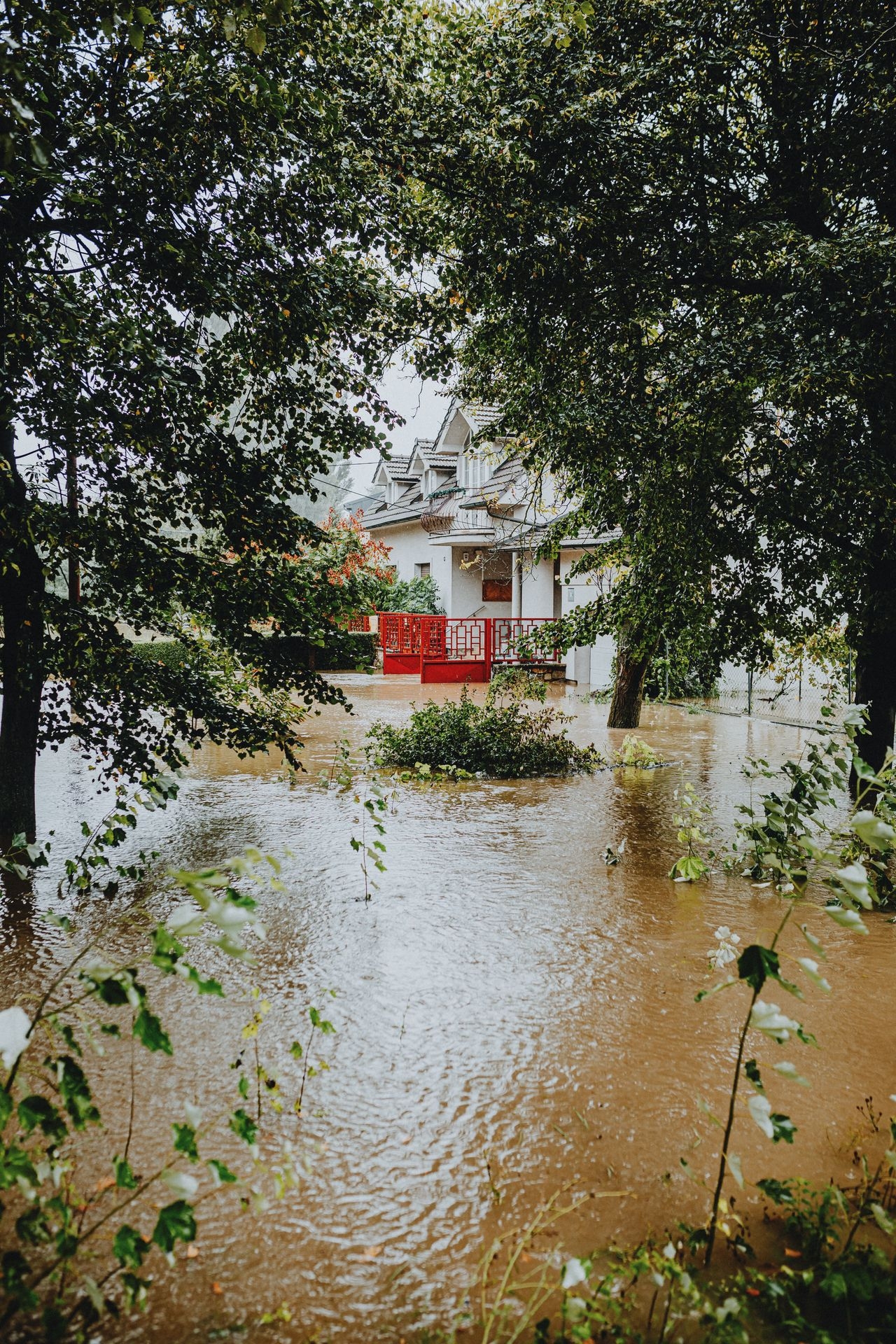
Your neighbor regrades the yard, adds a patio, changes a retaining wall, redirects a downspout, or completes another construction project. Everything seems fine until the next heavy rain. Suddenly, water that never caused a problem before is running across your property, pooling in your yard, entering your basement, washing over your driveway, or collecting near your foundation.
For homeowners in Pittsburgh and throughout Western Pennsylvania, where hills and elevation changes are part of the landscape, disputes over stormwater runoff can quickly become serious property disputes.
But if water is coming from a neighboring property, does that automatically make your neighbor responsible?
Not necessarily. Pennsylvania law distinguishes between water that follows the natural drainage of the land and water that has been artificially collected, concentrated, or directed onto neighboring property.
Understanding what changed, where the water is coming from, and what damage it is causing is an important first step in deciding what to do next.
Is a Neighbor Responsible for Water Runoff Onto Your Property?
The fact that water travels from one property onto another does not automatically establish liability.
Pennsylvania has long recognized that surface water naturally follows the contours of the land. A property owner is not automatically liable simply because improvements result in more surface water reaching lower land. How the improvements changed the natural drainage, and how the water is collected, directed, and discharged, are important parts of the legal analysis.
The situation can be different when a property owner artificially collects, redirects, or concentrates surface water and discharges it onto neighboring land. Other facts, including how the work was performed and whether applicable drainage requirements were violated, can also affect the analysis.
A dispute can arise after a neighbor installs drainage pipes or downspouts that direct water toward your property, changes the grade of the yard, or completes construction that substantially alters how runoff reaches your land.
The important question is not just, “Where did the water come from?”
It is also, “What changed in the way the water reaches your property?”
Why It Matters Whether Your Neighbor Changed the Water Flow
This distinction can be especially important on Pittsburgh's steep and uneven properties.
If rain has always traveled downhill across several yards during storms, that is a very different situation from flooding that begins only after the uphill property is altered.
Pennsylvania courts have long recognized that an upper landowner can be held responsible for artificially collecting surface water into a channel and discharging it onto lower property in a concentrated form.
Courts have also distinguished that type of conduct from the ordinary effects of natural drainage.
That means facts matter.
A new patio may increase the amount of impervious surface. A grading project can change the direction water travels. Drainage pipes can collect water that previously spread across the ground and discharge it at one location. A retaining-wall project can also affect the way water moves across neighboring properties.
None of those facts automatically proves liability. They can, however, help explain why a runoff problem suddenly appeared.
What if the Flooding Started After Construction or Grading?
Timing can tell an important part of the story.
If your basement stayed dry for years and began taking on water shortly after your neighbor completed a project, document that sequence carefully.
Depending on the project, useful questions may include:
- Was the property regraded?
- Were downspouts, drains, pipes, or swales added or moved?
- Was a new patio, driveway, addition, or other impervious surface installed?
- Was a retaining wall built or modified?
- Were permits or stormwater plans required for the work?
- Did the direction or concentration of runoff noticeably change?
Pittsburgh requires stormwater review or land-operations permits for certain projects that meet applicable thresholds based on factors such as land disturbance, increases in impervious surface, grading, and the type of work being performed. Whether a permit is required depends on the particular project's size and scope.
Municipal records can therefore be one piece of a larger investigation rather than something homeowners should assume answers the dispute by itself.
What Evidence Should You Save if Runoff Is Damaging Your Property?
Water disappears. Property damage can be repaired. Landscaping can be changed. A drainage pipe can be moved.
If water from a neighboring property appears to be flooding your Pittsburgh property, preserve what you can while the problem is occurring.
Photographs and videos taken during or immediately after rainfall can show where the water enters your property, how it travels, where it collects, and what it damages. Keep records of the dates when flooding occurs and photographs of conditions before and after a neighboring project if you have them.
Also consider preserving:
- communications with the neighboring owner
- photographs of visible drainage systems or property changes taken from places you are legally permitted to be
- repair estimates and invoices
- records of basement, landscaping, driveway, retaining-wall, or foundation damage
- insurance correspondence
- documentation showing when the problem began
In a more complicated dispute, a surveyor, engineer, or other appropriate professional can help evaluate property boundaries, elevations, drainage patterns, and where the water is coming from.
Do Deeds, Surveys, Easements, and Municipal Records Matter?
Sometimes.
A property dispute involving runoff may extend beyond the visible path of the water.
A survey can help establish property lines and the location of structures or drainage features. A deed or recorded easement may contain rights or obligations involving drainage or use of particular portions of the property. Municipal permit files, approved plans, or inspection records may help show what work was authorized.
No single document necessarily resolves the dispute.
The goal is to put the pieces together: what the properties looked like before, what changed, who controlled the change, how the runoff was affected, and what damage followed.
What if Runoff Is Damaging Your Foundation or Retaining Wall?
Recurring water intrusion deserves attention before the damage becomes more extensive.
Runoff may affect a basement, foundation area, driveway, landscaping, retaining wall, or other improvements. Repeated flooding can also interfere with how you use your yard, driveway, basement, or other parts of your property.
When water is being collected through pipes, drains, downspouts, or other drainage features, how and where that water is discharged can be especially important. Determining whether those features changed the natural drainage pattern often requires looking at both the properties and the work that was performed.
Every property is different, and responsibility should not be assumed based solely on which home sits uphill. Identifying where the water is coming from and what changed in the drainage pattern is an important part of determining what caused the problem.
Can You Resolve a Runoff Dispute Without Going to Court?
Litigation is not necessarily the first or only step.
Once the source of the problem is understood, some disputes can be addressed through communication, drainage modifications, repairs, negotiation, or agreements between neighboring owners.
The difficulty comes when the source is disputed, the damage continues, a neighbor refuses to address the problem, or the parties disagree about who is responsible for the cost of correcting it.
At that point, the available legal claims and remedies need to be evaluated based on the facts. Depending on the claim and the evidence, available remedies can include compensation for proven damage and, in appropriate cases, court-ordered relief addressing conduct that is unlawfully directing or concentrating runoff onto the property.
When Should You Talk to a Pittsburgh Real Estate Litigation Attorney?
You do not have to wait until water has caused extensive damage or a disagreement with your neighbor has become hostile.
If flooding began after construction, grading, drainage work, or another identifiable change to neighboring property, it can be helpful to determine what happened while the evidence is still available.
At Tarasi & Tarasi P.C., I handle real estate disputes involving property rights, deeds, development, zoning, property damage, and other conflicts affecting homeowners and property owners in Pittsburgh, Allegheny County, and throughout Western Pennsylvania. When I review a runoff dispute, I look at what changed on the properties, how the water is moving, what records and physical evidence are available, and what damage followed.
If runoff from a neighboring property is damaging your home or land and you are unsure what to do next, contact Tarasi & Tarasi P.C. to discuss the circumstances and your legal options.
Disclaimer: The articles on this blog are for informational purposes only and are no substitute for legal advice or an attorney-client relationship. If you are seeking legal advice about your specific situation, please contact our law firm directly.